
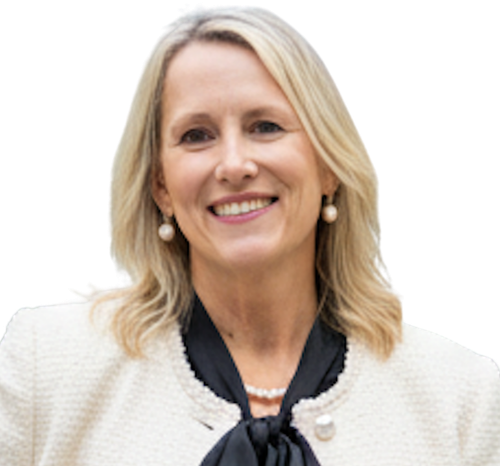
In this episode of On Boards, hosts Joe Ayoub and Raza Shaikh speak with Tina Larsson, a former Wall Street analyst, co-founder of The Folson Group, and author of Living The High Life. Tina works with co-op, condo, and other HOA boards to improve governance to reduce costs, manage major building projects and oversee their shared residence effectively.
Tina shares how she and her husband became involved in board governance after discovering that their New York City co-op board was poorly managed and incurring significant unnecessary expenses. After organizing their co-op neighbors and electing a new board majority, they introduced stronger governance practices to their board and saved their building substantial money in very short order.
The conversation explores the governance challenges faced by residential boards, which are usually run by volunteers responsible for complex decisions. Tina shares how boards can improve oversight, manage projects more effectively and shift from reactive decision-making to a more proactive approach to governing their communities.
Key takeaways
- Residential boards face complex governance responsibilities
- Volunteer board members are responsible for major operational decisions involving buildings, infrastructure, vendors, and regulation
- Many board members take on these responsibilities without formal training or governance guidance
- Financial oversight can reveal significant opportunities for savings
- Benchmarking operating expenses against comparable buildings can uncover areas of overspending
- Strategic vendor negotiations and cost reviews can reduce operating expenses by 5–10% in many buildings
- Effective governance requires proactive decision-making
- Boards that operate reactively often wait until problems become emergencies before acting
- Long-term planning helps communities address repairs, projects and maintenance before they become crises
- Establish clear roles and leveraging community engagement
- Governance improves when boards focus on oversight and strategy rather than trying to manage every operational detail
- Residents who want change must often participate directly by joining the board
- Building relationships with neighbors and encouraging qualified owners to run for board positions improves decision-making
- “Living the High Life”
- Tina’s book is a guide and blueprint on how to get involved in the governance of your co-op, and condos or HOA board and how to be an effective board member
Quotes
“ The only way that you can get a say in your community is by running for the board and it talks about skills; good skills, best skills, the elevator skills, and what you are passionate about.”
“[An HOA, co-op, or condo board] is acting as a miniature government. They are governing the community.”
“If you are on the board of a residential building… you have to try to manage being on the board and at the same time, you have to handle all shareholders’ or owners’ concerns.”
“ The only effective way to have a say in your living community is by being on the board.”
Links
Living the High Life: How Smart Co-op and Condo Owners Protect Themselves and Their Investment
Guest Bio
Tina Larsson and her husband helped her own co-op save substantial money through good governance, after which they formed The Folson Group. They support NYC co-op and condo boards with strategic advice, project management, cost reduction, and help them find a property manager that fits their needs. She is the author of Living the High Life, frequent podcast guest and speaker, and holds a LEED Green Associate designation. Tina is on a mission to educate and support NYC condo and co-op boards to help optimize their living community.
Transcript:
Joe: [00:00:00] Hello and welcome to On Boards, a deep dive at what drives business success. I’m Joe Ayoub, and I’m here with my co-host, Raza Shaikh. Twice a month, On Boards is the place to learn about one of the most critically important aspects of any company or organization; its board of directors or advisors, with a focus on the important issues that are facing boards, company leadership, and stakeholders.
Raza: Joe and I speak with a wide range of guests and talk about what makes a board successful or unsuccessful, what it means to be an effective board member, and how to make your board one of the most valuable assets for your organization.
Joe: Before we introduce our guest today, we want to thank the law firm of Nutter McClennen & Fish who again sponsored our most recent onboard summit in their conference center in the Boston Seaport. Nutter has been an incredible partner with us in every way. We appreciate all they’ve [00:01:00] done to support this podcast.
Our guest today is Tina Larsson. Tina is a former Wall Street analyst who, with her husband, bought a co-op in New York City several years ago. They soon realized their co-op board was not well suited for the job, so they took steps to reshape the co-op board and institute good governance, a board that would do the best for the owners of the co-op and along the way save several hundred thousand dollars for themselves and other owners.
Raza: Subsequently, Tina and her husband, Mark Foley, started the Folsom Group, which supports NYC co-op and condo boards with, among other things, strategic advice, project management, cost reduction, finding a property manager that fits their needs and [00:02:00] help with good governance. She is the author of Living The High Life, a frequent podcast guest and speaker, and holds a LEED Green Associate designation.
Joe: Tina is on a good governance mission to educate and support New York City condo and co-op boards so they can optimize their buildings. Smart co-op and condo boards don’t go it alone. Welcome, Tina, and thank you so much for joining us on On Boards today.
Tina: Thank you so much, Joe and Raza, for having me, and thank you for that lovely introduction.
Joe: Well, you’re a long-time listener of our podcast, it’s the least we can do.
Tina: I am. I am. It’s a very interesting podcast and it’s such a needed support that you have for governance in [00:03:00] nonprofit volunteer boards. Well, corporate boards is one thing, but volunteer boards, that is very needed.
Joe: And we like to look at the board ecosystem in every area, whether it’s public, private, nonprofit, or anything else, because we think the same principles apply, which is what makes your story so compelling. Why don’t we start off with at the beginning, which is one day you decided to buy a co-op.
Tina: Yes. One day we decided to buy a co-op, and that was a long time ago, but in the beginning we didn’t really pay attention.
Joe: How long ago was it? I don’t remember that.
Tina: So that was in 2004, so that is over 20 years ago, 22 years. So, we lived there for a long time. My husband, Mark Foley and I, we had an independent financial advisory firm. We come from a long background in the finance services [00:04:00] industry and we were analysts, so analyzing multi-billion dollar companies for the purpose of investing our clients’ money. Then one day we said, “You know, this board is not doing a very good job.” And you said it very delicately. I’ll say it in my words, they were terrible.
Joe: Okay.
Tina: They were bad at communicating. They were bad at treating different people different ways. They did everything wrong. So, we spoke with some of our neighbors and they agreed with us. So, we organized a coup and took over the majority of the board.
Joe: So, before we get into the coup, what was it that you saw, or how did you learn about what they were doing or failing to do that led you to obviously take a pretty drastic step?
Tina: Yeah, so they were not answering, we were actually not allowed to use our terrace, so that’s one thing, and when [00:05:00] we offered to remedy all of their concerns about us using our own terrace, they basically said, “No, we don’t accept that.” We said we can buy our own insurance, which we found out later that we weren’t even required. They said, “No, no, no.” Didn’t matter what we did, and so that was one item.
There were several lawsuits in the building, so several people had a hard time getting mortgages and buyers were having a hard time getting mortgages because there were too many lawsuits. We just saw that our HOA fees were increasing by 5% per year, and at that time, we had been there for almost 10 years. So, when we looked and said 5% every year, over such an extended period of time, on average, it doesn’t even make sense because how many service providers can actually increase their fees by 5%? That doesn’t even make sense.
So, we used our analytical thinking from our background at the time and we said, “This [00:06:00] doesn’t make sense. We need to fix this.” And that’s when we spoke with our neighbors and they said, “Yeah, I know, it’s crazy, too much increases.”
Joe: Why didn’t anyone else ever do anything?
Tina: That’s a good question. I like to build community. I’m an organizing kind of thing. I’m like that kind of person, and it is just natural to me. I’m like, “This doesn’t seem wrong, let’s fix it.” I’m a fixer.
Joe: Okay.
Tina: So, we spoke with these individuals and they agreed and we said we need four people on the board, and we realized that if you’re just one person on the board, you are not going to be able to get anything done, so you need to have the majority. So, four new board members who had no idea of how buildings run, how an HOA board operates, and so my husband is on the board. I’m not, but the new board, these four new [00:07:00] individuals, they asked me for my help. They said, “Can you see if you can find any savings?” So, I used my analytical skills, went out, got some financial statements from other buildings, and then I put together a benchmark, and by now with our business being in business for 12 years, we have thousands of the data points with various costs that we compare our clients’ costs with so that we can renegotiate what is high.
Joe: But at the time you did analysis of your own building and its expenses and realized they were way overspending.
Tina: Yes, but just looking at one, so in our building, let’s say that we have an elevator service contract and it’s $1,800 per month. How do you know if that’s high or low? You don’t. So, my husband and I went out and pretended to be buyers, both apartments, so that we would get the financial statements for other buildings, and based on that, we put together a benchmark.
Now, we could compare “Okay, so [00:08:00] these guys, they only pay $1,200 per month. They have the same amount of elevators as we do when we’re paying $1,800, there might be something there.”
Or we had a marble polishing contract, so we have a full-time staff and marble polishing company who comes in for $30,000 per year to polish our marble in the lobby, but this building over here, they don’t have that contract, and so how do we find that out? So, we spoke with the super, and the super said, “Oh no, our staff is standing around doing nothing at night when there’s nobody there.” So, he said they could do it, so we bought a machine that was $1,800 and some detergent or whatever solutions that we needed and then the staff does it. And the guy who works overnight, he loves his marble-polished lobby because he’s so proud and he said, “Well, it keeps me awake. It gives me something [00:09:00] to stay awake overnight when nobody’s here.”
Joe: So, when you say you organized the coup, you got proxies from a bunch of your neighbors, got four new board members elected, and then the new board majority kind of took steps to become, let’s say, more financially responsible.
Tina: That’s exactly it, and in the first three years we saved our building $340,000, which is 10% of our operating budget.
Raza: That adds up and that’s real money.
Tina: And it accumulates and it’s millions by now, we stopped counting, but we set up our business and we reached two million or something and then we said, “Yeah, we don’t have time to count.”
Joe: Is that new board still running your co-op.
Tina: Yeah. And that exactly the same composition. My husband is the board president, has been that since the coup 15 years ago, and some of the other board members have been there for a long time, but it’s evolved. Initially, we [00:10:00] just needed seats.
Joe: Right. Know I understand. Did you at the board or did the board talk about what it means to be a board member, specifically that being a board member means you have fiduciary duty to whoever it is or whatever it is that you’re doing, you have a job to do. Was there ever a conversation about that with the old board?
Tina: There was a lot of talk and not so much doing.
Joe: I see. Okay.
Tina: Yeah, you can say that you are a volunteer and you have fiduciary duty, but if you are not adhering to it…
Joe: You do, yeah.
Tina: Yes.
Raza: So, Tina, you and your husband get into this kind of accidentally or realizing that you have a job to help fix your condo board and sounds like you realize that others may need this as well, and you decided to start Folsom Group. So, talk about that, what is it, how does it come about and [00:11:00] how does it work with other condo boards.
Tina: Yes. And HOA boards.
Raza: Wherever people live. Yeah. In fact, maybe talk a little bit about that as well. A lot of people live in co-ops, condos, or HOAs.
Tina: Yes. So, that’s the legal term. If you’re in a different part of the country, it might be called a community association or something else and that’s how it’s termed legally in that area, it doesn’t matter to us.
So, if you own in some form of community, and that can be an apartment, it can be townhome area, it can be a gated community, it can be a golf community or something else, so if you own what you live in as opposed to renting it and you can’t have everybody in that ownership. You can’t have a hundred people making decisions together. So, therefore, you have [00:12:00] to vote in a handful of people, usually somewhere between three and seven or nine. Those are the people who then make decisions for the entire community, and that is the board, and sometimes it’s an HOA board, it’s a condo board, it’s a co-op board, but it’s a board who then is basically acting as a miniature little government. They are governing the community.
Our specialty, there are 66 million Americans who own in an HOA. In New York City, there are three million people who own in a co-op or condo or on Long Island, it might be an HOA, but three million people, so it’s a large community in New York, and this is our focus, but the same concept applies anywhere. It doesn’t really matter.
The problem that we’ve discovered over those three years as [00:13:00] you see with nonprofit boards, with the corporate boards, well, maybe with them too, is that if you are a board volunteer, then you’re doing this on your spare time. And if you think about it, if you are on a board of a consulting firm, that might be very simple to understand and very easy. But if you are on the board of a building that has union staff that has to adhere to electrical codes, to plumbing codes, to building codes, to all of these different regulations, then you have to try to manage being on the board and at the same time, you have to handle all the shareholders’ or owners’ concerns and then you have mice and bed bugs, and then your manager is a property manager, but the property manager is a third-party firm that they hire, their [00:14:00] business model is so that they have to have six, seven, eight buildings in order for them to operate, or that’s how their business is structured, which means that’s like running six, seven, eight businesses.
Raza: Mm-hmm.
Tina: And I don’t know about you, but for me, one business is keeping me plenty busy.
Joe: So, the model for the management companies only works if they have a number of clients and basically it’s not designed for a significant, let’s say, hands-on kind of on-the-ground, every building is different, so it’s up to the board of whatever building it is to make sure that they’re doing what they need to do and that the board is hiring whatever they need along with whoever the management company is.
Tina: Exactly, you took the word out of my mouth.
Raza: I’ll summarize. So, hey, there’s no pay, there’s a lot of complexity and you have to deal with a lot of [00:15:00] things and you’re responsible for a lot of decisions. What could go wrong? So, talk about then how Folson Group then helps make this better for various co-op and condo boards.
Joe: Give an example, you don’t have to give any names, of one client that you helped. If someone says we need help, what do you do? You go in and what happens?
Tina: Okay, so what happens? So it depends on what they hire us for. And just to back up a little bit, when we started, we started with our cost reduction services only. We say, “Okay, we’re going to compare all of your operating expenses to what our benchmark and we’re going to save you some money.” And we typically save them 5 to 10%.
The most common areas of savings are heated water, electricity, and insurance. So, very often they have an insurance broker that they are not even connected with, so it’s not a personal relationship. So, we have the [00:16:00] board and then the property manager is the one who speaks with an insurance agent or the insurance broker, which means that the insurance broker has no connection there, so they just renew every year. So, it’s very common that insurance is the highest savings that we have.
But then it’s also for product. So think about it, a lot of buildings in New York, they were built in 1900s, we just replaced the boiler that was installed in 1902. So, all systems, all buildings have sides that need repairs; roofs that need replacement; leaks, there are so many leaks everywhere, and those projects cost something. The engineer has no financial incentive of getting the lowest bid. The property manager gets the bids from the engineer, so we review those bids for any capital projects and then we’ll release those.
Then we had [00:17:00] a client, and I’ll give you this example, so we had a client who called us up who said, “We are five board members and we have several projects in the building, and all five of us have a different opinion on where we should start, so we have a list of projects. We know that we want to replace the boiler. We know that there are leaks from the roof, so we probably need to replace the roof. It’s a walkup, so there are stairs. The stairs need to be repaired because they’re actually crumbled and they’re a little unsafe, and then we want to do intercom and renovate the entire lobby.” So, they said, “But we don’t have time and we don’t trust the property manager, so we don’t want bids.”
So, we had nothing to compare to, so we opened our project management where we said, “Okay, we’re going to advise you on the priority. Since leaks were a problem, we can’t start with fixing the stairs until the leaks have been solved.”
So, we provide them with a [00:18:00] strategic advice on how to practically implement their wishlist and how to fund it and in what order, and then we physically go there and oversee and meet with contractors to plan it and use a strategic plan to begin with the end in mind. We know that this is what they want at the end, and this is how we’re going to get you there.
Raza: I think it sounds like it really just allows you to come in and help the board. There’s part of the doing and decision making and really help them actually elevate their game to be more governing rather than doing crisis management. What is the typical method that you go in? Are you interviewing them, like what’s the typical engagement? Or how does it start with a new condo board that you start working with?
Tina: We do a [00:19:00] lot of networking, but our clients typically find us from one of their residents. So that’s one of the three million New Yorkers who has an interest; they especially are interested in our cost reduction because that’s on a contingency, so it sounds very good. It’s not going to cost you anything and it’s always very easy to tell others what to do, how to do your job better. I don’t know if you have that experience with anyone. So, the owners very often want to introduce us to their board, and that’s how we get most of our clients.
Joe: What happens after cost reduction?
Tina: Once we speak with boards, they very often are interested about our cost reduction. We also talk about our project management and our strategic advisory or our property management search service, and very often in that conversation they feel that [00:20:00] those are more urgent. So, they have urgent projects that they need to solve, and they have a bad relationship with their property manager or they have lost trust in their property manager. So, very often those items become much more urgent and the cost reduction very often falls on the side.
Joe: Do you get involved in any way with helping recruit better board members, or do you work with the board to help recruit board members or anything like that, or do you just work with whoever’s in at the board? And I’m guessing if they hire you, that probably set something about them in terms of, but really trying to do something different than just check the boxes. Do you get involved with the board in terms of who’s on it and who might be on it that would might add more to the decision making?
Tina: That’s a great question. And we don’t directly, [00:21:00] but we do in some way because there’s a lot of education. While we work with a board, there’s a lot of education and we provide a support. We say, “Have you thought about doing it this way? Have you thought about doing it that way?” And it kind of comes around.
It’s very funny that you asked that because we have a tool on our website called The Quorum Blueprint, and also, of course, I have my book Living The High Life. So, let’s go back to the book instead. So, Living The High Life is a blueprint on how to get involved If you own an HOA anywhere in the country, so the 66 million Americans, how to best have a say in in your HOA co-op or condo, and that is to be on the board. And then in the book, there are tips on what skills make best board members.
Joe: And what are they?
Tina: It depends. [00:22:00] So, for instance, and one of the examples that I give in my book, isn’t that always the case? It depends. One of the examples that I give is if you are in a six-story building and you need new elevators, and the board is having a hard time making decisions about the elevators, you know who’s the best person to recruit to the board? The person who lives on the sixth floor who can’t stand that there’s no elevator. It’s going to be very personal to them. They want to fix it. That person would make a good board member in that situation because that person really wants to spearhead that. They want them done.
Raza: What else does the book cover? And do you basically position it as this is the distillation of kind of your wisdom and thoughts, and if somebody wasn’t hiring you, that they can learn pretty much most of the things [00:23:00] that a condo board or a condo board member should be up to speed with, be knowledgeable about, and it’s kind of like a training for them to be more effective? How do you position the book?
Tina: So, the book is positioned, that our goal is for every single board client that we work with, that they operate in a proactive way. And the worst-case scenario, in our opinion, is the collapse in Surfside, Florida, very tragic. So, that was a situation where they did not do all the things that they needed to do.
So, this guidebook is a guidebook for owners and for boards that will help them make decisions and take actions than from only taking care of emergencies, to operating in a proactive way. It’s a guidebook with lots of tools. It has our story, it has lots of our [00:24:00] client stories, anonymous, and examples. We prioritize the importance of the only way that you can get a say in your community is by running for the board and it talks about skills; good skills, best skills, the elevator skills, and what you are passionate about. You want something in your industry or when you are advising non-profit boards, Joe and I actually spoke about that the other day, if it’s one particular disease, for instance, then they’re probably somehow affected by that disease and so they’re very passionate about it. But in a building, they’re just random people. It’s not like they’re passionate about their building. That’s their home, so it’s a little different scenario versus the nonprofit.
Raza: Have you found it more effective to get the book in the hands of the owners? Or to get the book in the hand of the board members? Which way does it [00:25:00] work better for actually making your condo board better?
Tina: It’s a great question. Because we have many boards that used to not be boards who followed our template exactly and it says, “This is what you need to do. These are the steps that you need to do, and this is how friendly you need to be with your neighbors.” I mean, this is New York. Everybody, they start with saying, “I don’t know any of my neighbors.” Well, you read my book. You need to get to know your neighbors.
Joe: Oh.
Tina: And then they call us one year later and they say, “Oh, I’m now on my board and we took over the board and we now have four board members, five more,” whatever they have and they took over the board.
Joe: If you could summarize the top three or four takeaways from the book, just what are the things that you would learn from this book? I’m a board member in a co-op, and I don’t really know what I’m doing. [00:26:00] I somehow got stuck doing this, which most board members and co-ops get stuck doing, and I read the book, what will I learn? What are the top three to five things that I’ll actually learn?
Tina: So, Joe, the top three takeaways from my book are, number one, the only way to have a say in your community is by being on the board, you need to be on the board. Number two is knowing the difference of the responsibilities, but with the different parties, who is responsible for what in your community, and number three is the importance of taking your building to a proactive motive from only reacting to emergencies.
Raza: Wonderful.
Joe: And in terms of how they find the resources that you and your husband have discovered over time, is that also in the book?
Tina: Not really. It’s examples. [00:27:00] It’s some resources, but it’s primarily examples and they’re real examples, so they’re easy to read and understand and relate to.
Joe: So, if you read the book, you’d understand that you have recourse in a number of ways to find the resources you need to properly manage where you live.
Tina: Absolutely.
Joe: Tina, it’s been a fascinating conversation. Thank you so much for joining us today.
Tina: Thank you so much, Joe. Thank you so much, Raza. This was wonderful. And oh, don’t forget, visit me www.thefolsongroup.com and by my book on Amazon, Living The High Life.
Joe: Thank you all for listening to On Boards with our guest, Tina Larsson.
Raza: Please visit our website at OnBoardsPodcast.com. That’s OnBoardsPodcast.com. We’d love to hear your comments, suggestions, and feedback. If not already a subscriber, please be sure to [00:28:00] subscribe at Apple Podcast, Spotify, or wherever you get your podcast. And remember to leave us a five star review.
Joe: And please remember to tune in for the next episode of On Boards. Thanks.