
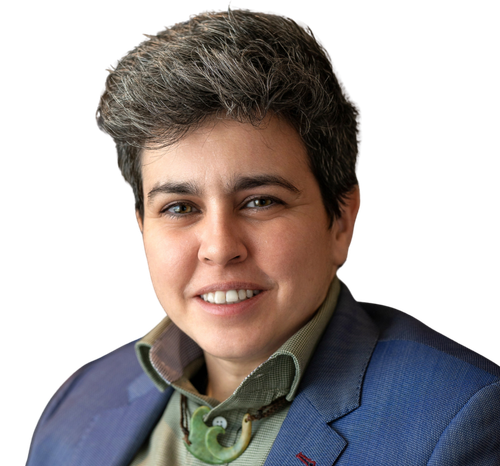
In this episode of On Boards, hosts Joe Ayoub and Raza Shaikh speak with Natalie McVeigh, founder of Oikonomia Advisory. As an expert in the dynamics and governance of family businesses, Natalie discusses how families can establish effective governance structures, prepare the next generation and introduce independent directors.
Natalie explains the importance of separating family councils from boards of directors, establishing ownership clarity and bringing outside perspectives into family businesses. She also highlights succession planning and why future generations in a family should have the freedom to pursue their own interests rather than feel obligated to join the family business.
Key takeaways
Separate family, ownership and business responsibilities
The Three-Circle Model helps families distinguish between family matters, ownership decisions and business management.
Having the same people involved in every governance body undermines accountability, checks and balances, and diversity of thought.
Family members may have different roles and levels of involvement in the business, depending on their skills and interests.
Separating responsibilities creates more opportunities for family members to contribute in meaningful ways without requiring everyone to participate in the family business.
Family councils and boards of directors serve different purposes
Family councils focus on family relationships, education, shared values and philanthropy.
Boards of directors focus on business strategy, oversight and decision-making.
Family councils can help families identify shared goals and determine how wealth can support future generations.
Successful family enterprises prioritize learning, collaboration and planning together, even when family members pursue different professional paths.
Prepare the next generation through education and clear expectations
Financial literacy workshops, internships and job rotations help future generations develop skills and understand their responsibilities.
Establishing board qualifications early helps family members understand what is required for future leadership roles.
Board orientation and ongoing education can help prepare future directors for their responsibilities.
Outside educators can provide valuable perspectives and help family members learn in ways that may be more effective than relying on parents or relatives.
Independent directors bring valuable outside perspectives
Independent directors should fill expertise gaps and bring an outside perspective the family does not have.
McVeigh recommends, when possible, starting with a five-person board, including two independent directors, two family members and a chair.
Directors should have an independent relationship with the family rather than being friends or longtime associates of the founders.
Families should prioritize directors with experience in areas such as finance, marketing, public relations and family business governance.
Quotes
“We can’t all be equal, we can’t have the same voices, and if we keep duplicating things, bad governance is no governance.”
“You can’t have effective, efficient governance if it’s the same three people or the same four people on every governing body.”
Links
Guest bio
Natalie is a Family Enterprise Advisory with an extensive coaching and mediation background with more than 15 years of experience leading to her founding Oikonomia Advisory. She is Master Neuroplastician (M.npn), specialising in Conversational Intelligence (C-IQ). Natalie serves Fellow and Faculty of the Family Firm Institute, serves on the Purposeful Planning Institute’s Education Development Committee, is the Director of Research and Development at Aspen Family Business Group, Faculty of the FBA Accreditation Program through the University of Adelaide, and a Trust and Estate Practitioner (TEP) through STEP. Natalie is a Certified Happiness Trainer and is an entrepreneurial and executive coach trained through iPEC.
She has her M.Sc. in Applied Psychophysiology from Saybrook University, a M.S. in Business from the New England College of Business and Finance, and B.A. from Hood College with a double major in Philosophy and Law and Society